


Luxury Homes, Wellness, and a More Natural Way of Living
In the finest homes, beauty is not only seen. It is felt.
Biophilic design reflects a timeless desire to live in closer relationship with the natural world—to be surrounded by natural light, fresh air, water, organic materials, greenery, and spaces that invite a sense of calm. In South Florida, where architecture, landscape, and waterfront living are so naturally intertwined, this approach feels especially resonant.
For buyers and sellers drawn to luxury homes that support well-being, sustainability, and a more restorative way of life, biophilic design offers something meaningful: a home that feels elegant, grounded, and deeply connected to place.

What Is Biophilic Design?
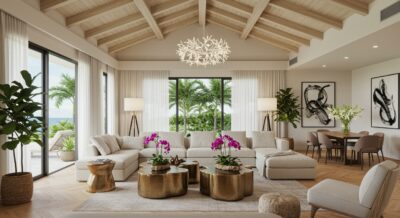
Biophilic design is an approach to the home that reflects our innate affinity for nature. It is often expressed through abundant natural light, organic materials, greenery, open views, water, natural airflow, and a seamless relationship between indoor and outdoor spaces. At its best, it is not merely decorative. It shapes the entire experience of home—how a space is perceived, how it is lived in, and how it lingers in memory.
In practical terms, biophilic design may be reflected in sunlit interiors, framed views of gardens or water, natural stone and wood, living greenery, shaded terraces, natural ventilation, and interiors that feel visually calm rather than overstimulating.
- Sunlit interiors that shift beautifully throughout the day
- Natural materials such as stone, wood, linen, plaster, and clay
- Framed views of gardens, sky, water, or tropical landscape
- Seamless indoor-outdoor living spaces
- Living greenery that softens and animates a room
- Calming, uncluttered interiors that feel balanced and welcoming
- A thoughtful connection between architecture and the surrounding environment
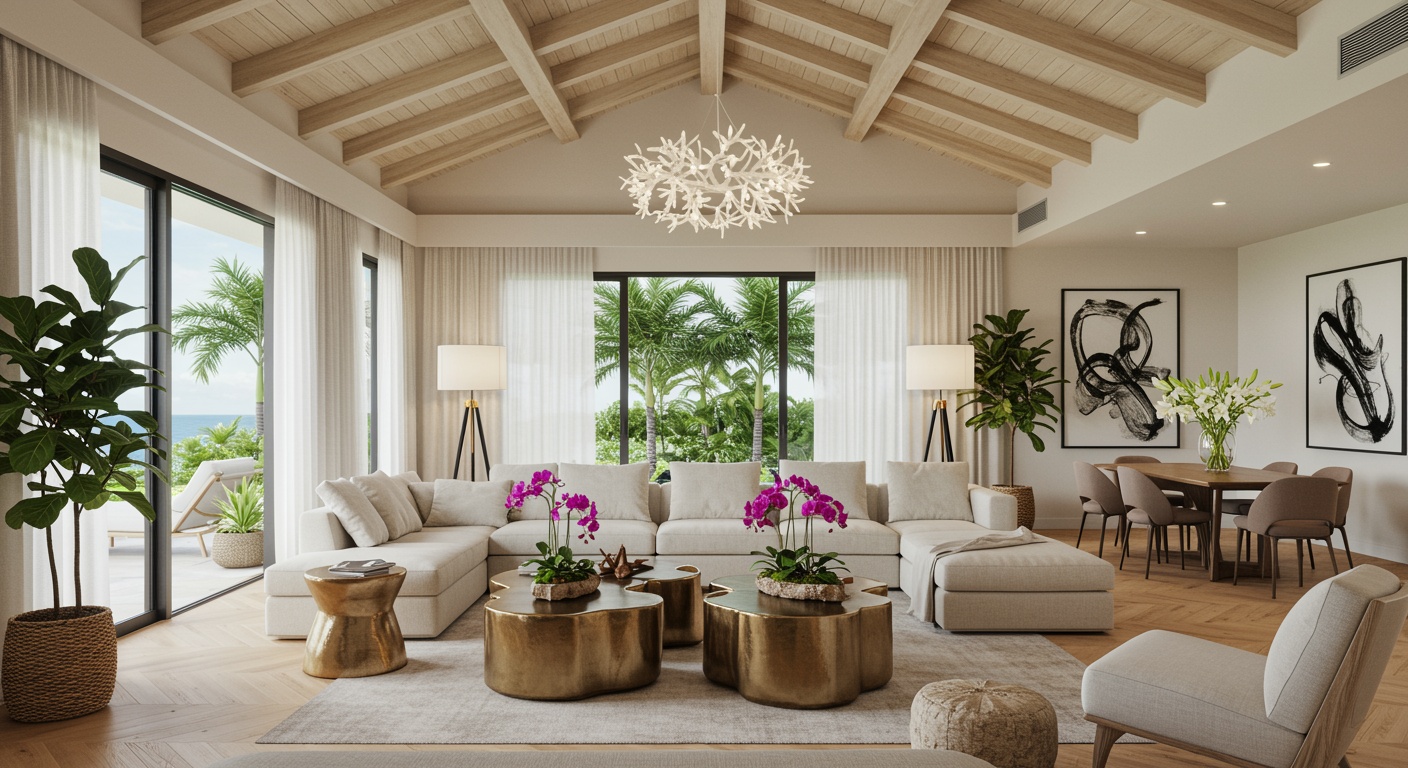
Why Biophilic Design Feels So Natural in South Florida
Few places lend themselves to biophilic design as beautifully as South Florida.
Here, the natural environment is not incidental to daily life; it is part of the experience of home itself. Sunlight pours in through expansive windows. Tropical greenery softens architecture. Breezes move through open spaces. Water—whether ocean, Intracoastal, canal, or pool—often becomes part of the setting and the rhythm of everyday living. Because of this, biophilic design does not feel imposed in South Florida. It feels instinctive. It feels aligned with the climate, the landscape, and the lifestyle.
This is also one reason the concept resonates so strongly with today’s sophisticated buyers. Many are looking not simply for square footage or finishes, but for homes that feel healthier, calmer, more connected to nature, and more supportive of daily well-being.
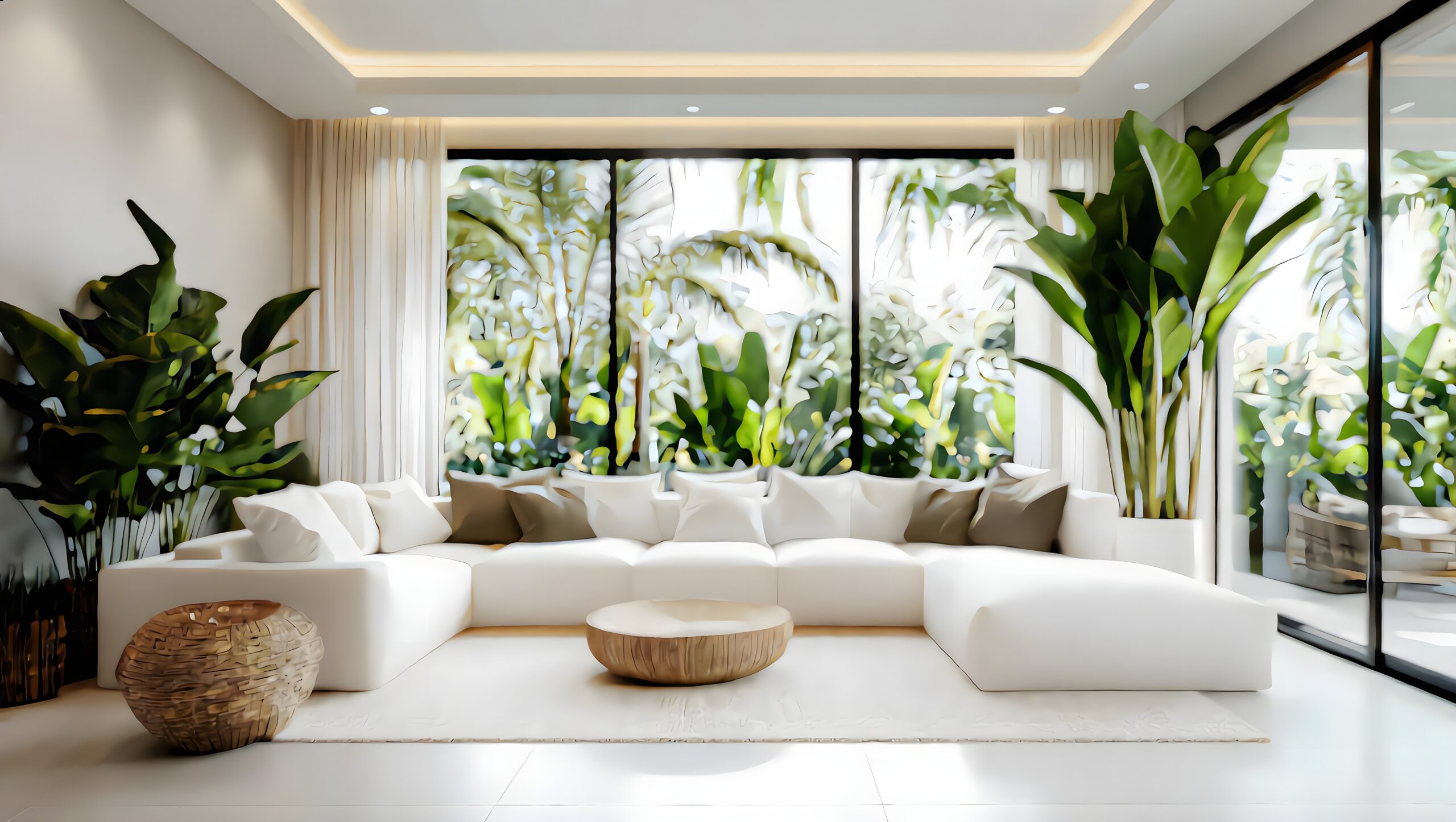
Biophilic Design in Waterfront Homes
In waterfront homes, biophilic design takes on an even more powerful dimension.
Water introduces movement, reflection, stillness, and light in a way that no decorative feature can replicate. It changes by the hour. It catches the sky. It amplifies morning light and softens evening. It creates a living backdrop that brings sensory richness and emotional depth to the experience of home.
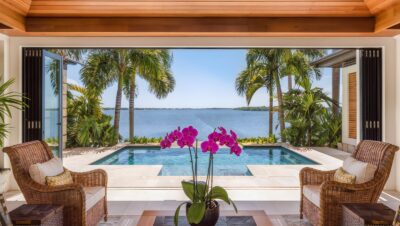
As environmental psychologist Dr. Sally Augustin has written, being able to see water from home has been linked with better physical health, and even seeing water in a swimming pool can bring down blood pressure. That helps explain why waterfront homes so often feel compelling on an emotional level: they do not merely impress; they soothe.
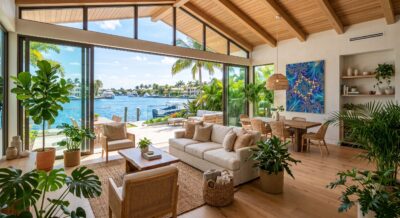
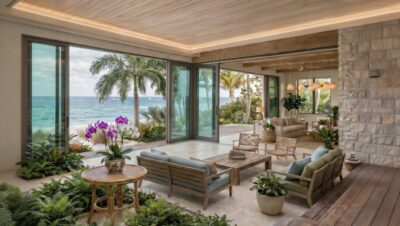
When a waterfront residence is thoughtfully designed—or thoughtfully presented—it becomes more than visually impressive. Retractable walls of glass, natural stone flooring, pale woods, shaded outdoor rooms, restrained greenery, and carefully framed sightlines can help dissolve the boundary between the residence and its setting. In the finest examples, the architecture does not compete with the landscape. It yields to it gracefully.
That is often what distinguishes a waterfront property that is simply striking from one that feels truly unforgettable.
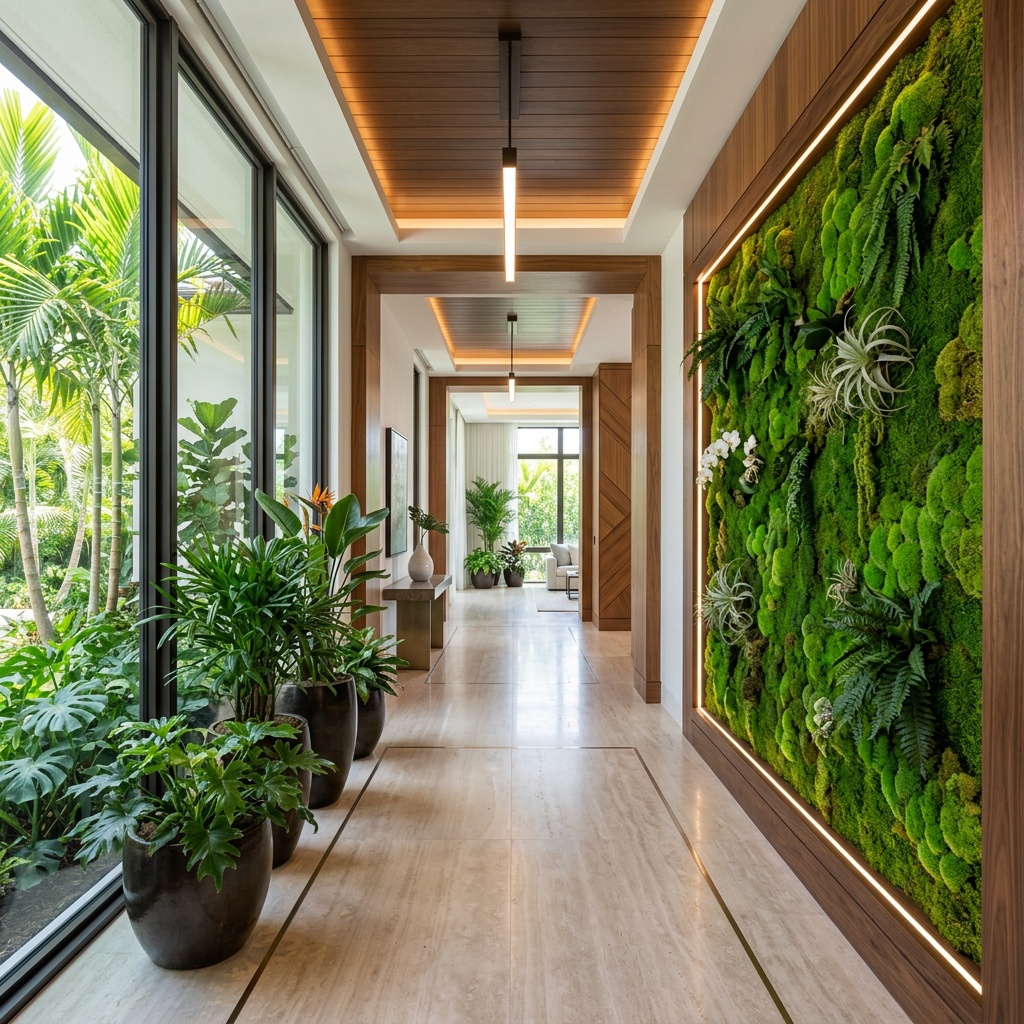
Why Biophilic Design Enhances Wellness
One of the most compelling reasons biophilic design matters is that it is not based on aesthetics alone. A growing body of research has linked nature-connected environments with lower stress, improved mood, stronger cognitive performance, and a greater sense of comfort and restoration.
Here again, Dr. Sally Augustin’s perspective is especially illuminating. She notes that people feel very comfortable in biophilically designed spaces—so comfortable, in fact, that the odds increase dramatically that they get along well with other people and that their brains work to their full potential.
In a luxury home, this helps explain why certain spaces immediately draw people in. They feel lighter. More peaceful. More welcoming. More alive. Visitors may not describe the experience in scientific terms, but they often recognize it instantly. They feel at ease there. And very often, they do not want to leave.
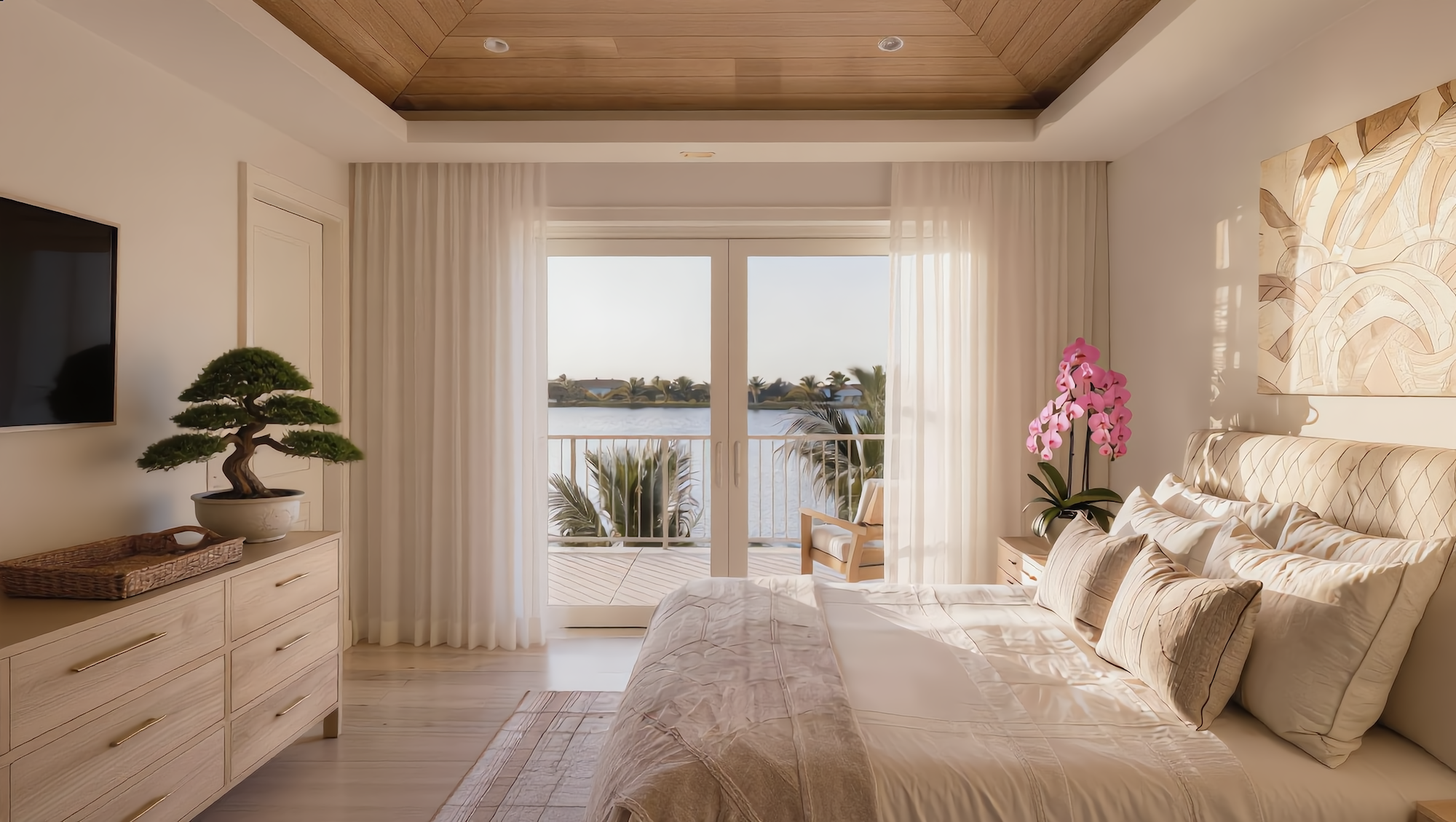
Why You Should Use Biophilic Design When Selling Your Home
For sellers, biophilic design is not just a design philosophy. It is also a powerful presentation strategy.
In luxury real estate, buyers respond not only to scale, finishes, and address. They respond to atmosphere. They respond to how a home makes them feel as they move through it. A residence that feels light-filled, calm, airy, and quietly welcoming often leaves a deeper impression than one that is visually impressive but emotionally distant.
This is particularly important in South Florida and especially in waterfront homes, where the natural setting is often one of the property’s greatest assets. When you thoughtfully emphasize light, landscape, greenery, breeze, water, and indoor-outdoor flow, you are doing more than making a home look attractive. You are helping prospective buyers feel the lifestyle the property offers.
Biophilic presentation can help a home feel more serene and welcoming, appear more spacious and airy, emphasize its connection to gardens, sky, or water, align with the priorities of wellness-minded and sustainability-conscious buyers, and create a memorable emotional response that lingers after the showing.
In other words, biophilic design can help transform a property from a home that is admired into a home that is deeply desired.
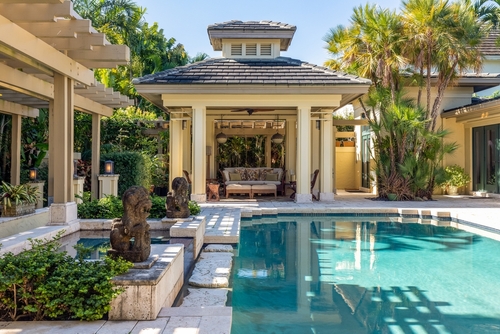
How You Can Incorporate Biophilic Design Into Your Home
Incorporating biophilic design does not necessarily require a major renovation. Often, the most effective changes are thoughtful, restrained, and highly attuned to the home itself.
- Maximize natural light and keep window lines visually open
- Draw attention to garden, sky, pool, or waterfront views
- Introduce natural materials such as wood, linen, stone, jute, clay, or plaster
- Use greenery in a refined, architectural way rather than as decoration alone
- Soften transitions between indoors and out
- Refine terraces, lanais, courtyards, and pool areas so they feel like natural extensions of the home
- Reduce visual clutter and allow rooms to feel quieter and more breathable
- Use natural textures and a calm palette to create a sense of ease
That is also why people can fall in love with these spaces so quickly. A beautifully biophilic home appeals not only to taste, but to the senses and to the emotional imagination of what daily life there might feel like. It can create not just admiration, but longing.
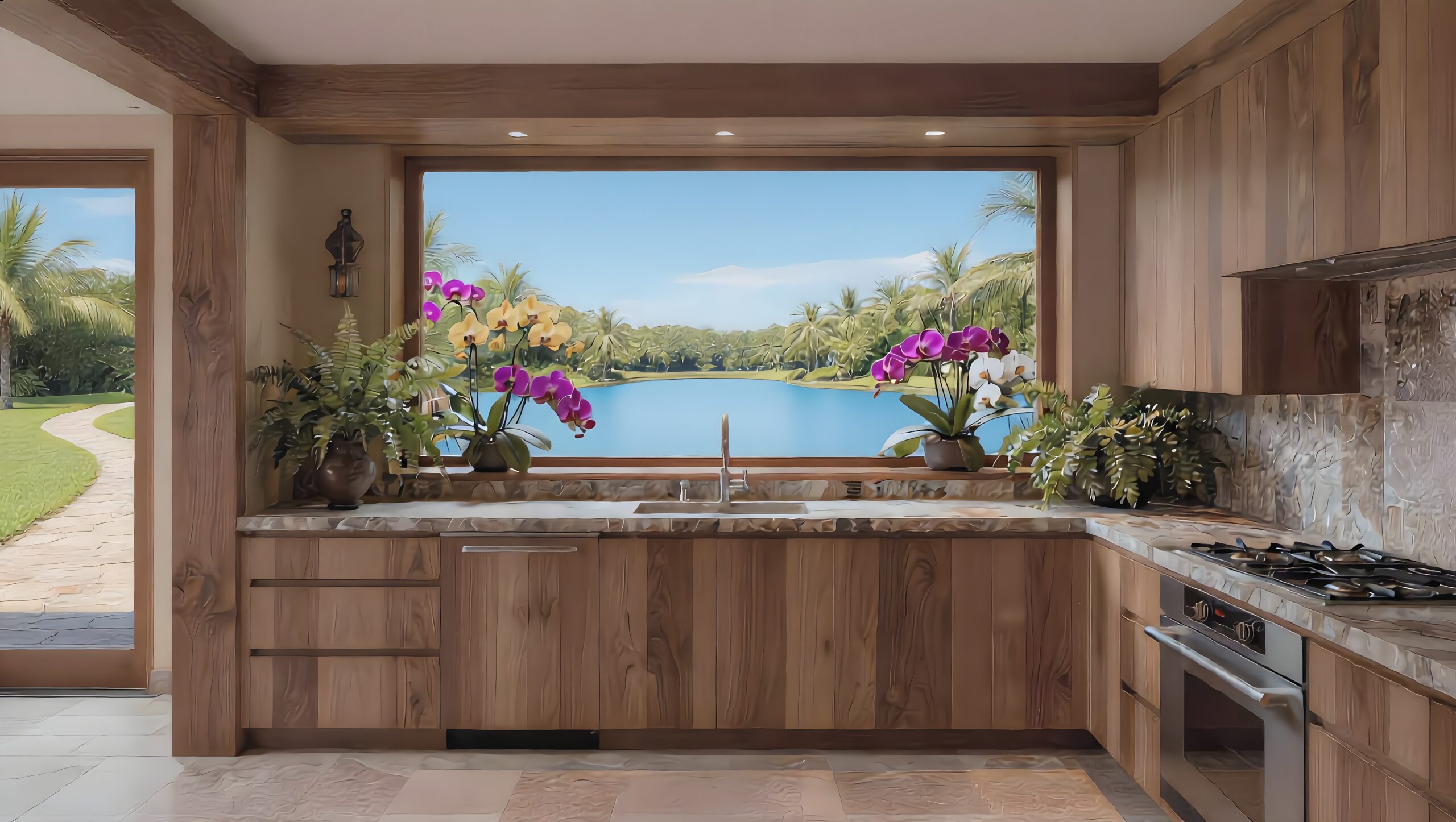
Why These Homes Feel Like Sanctuaries
The most memorable homes often create an immediate sense of ease.
There is a quiet shift that happens when one enters a space filled with natural light, softened by organic materials, and connected to gardens, water, or sky. The eye settles. The pace slows. The atmosphere feels gracious rather than demanding. Visitors may simply say that a home feels peaceful, fresh, balanced, or calming. But often what they are responding to is a deeper sense of harmony—a feeling that the home is gently aligned with the natural world.
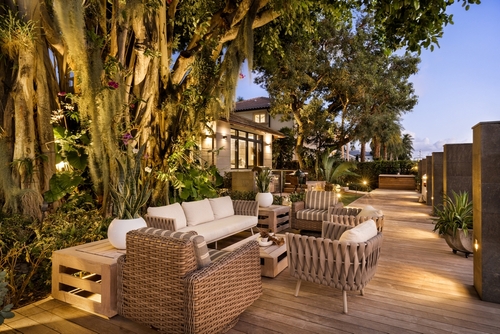
Selling Your Home?
A thoughtfully presented home does more than photograph well. It creates a feeling.
Biophilic elements such as natural light, seamless indoor-outdoor living, restrained greenery, organic textures, and a graceful connection to landscape or waterfront can make a residence feel calmer, more refined, and more emotionally resonant. In South Florida especially, these qualities can elevate a home’s presentation in a way that feels both natural and quietly luxurious.
For discerning buyers, that sense of harmony can be unforgettable.
If you are considering selling, I can help you bring forward the qualities that make your home not only beautiful, but deeply compelling to discerning buyers.
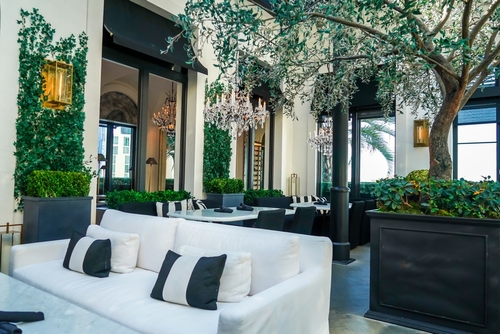
Notable South Florida Examples of Biophilic Design
Across South Florida, some of the region’s most memorable public spaces reflect biophilic design in subtle and striking ways. Through landscape integration, filtered light, water relationships, natural materials, and indoor-outdoor continuity, these places demonstrate how deeply design can shape experience.
- Pérez Art Museum Miami (PAMM), Miami — with its hanging gardens, shaded terraces, and bayfront setting, PAMM offers a beautiful example of architecture in dialogue with landscape and water.
- The Kampong, Coconut Grove — immersed in tropical planting and layered natural beauty, The Kampong is a powerful reminder of how nature can shape atmosphere and emotional experience.
- The Surf Club, Surfside — an elegant expression of restrained luxury, The Surf Club reflects the power of privacy, filtered light, lush landscape, and seamless indoor-outdoor living to create serenity.
- Vizcaya Museum & Gardens, Miami — though historic in character, Vizcaya remains a compelling example of how gardens, water, architecture, and coastal air can come together to create an extraordinary sense of place.
- Fairchild Tropical Botanic Garden, Coral Gables — Fairchild demonstrates how pathways, shade, plant life, and sensory immersion can transform an environment into something calming and memorable.
- The 1 Hotel, Miami Beach — Their partnership with Plant the Future demonstrates how living walls, reclaimed materials, and nature-integrated spaces can create environments that restore rather than merely impress.
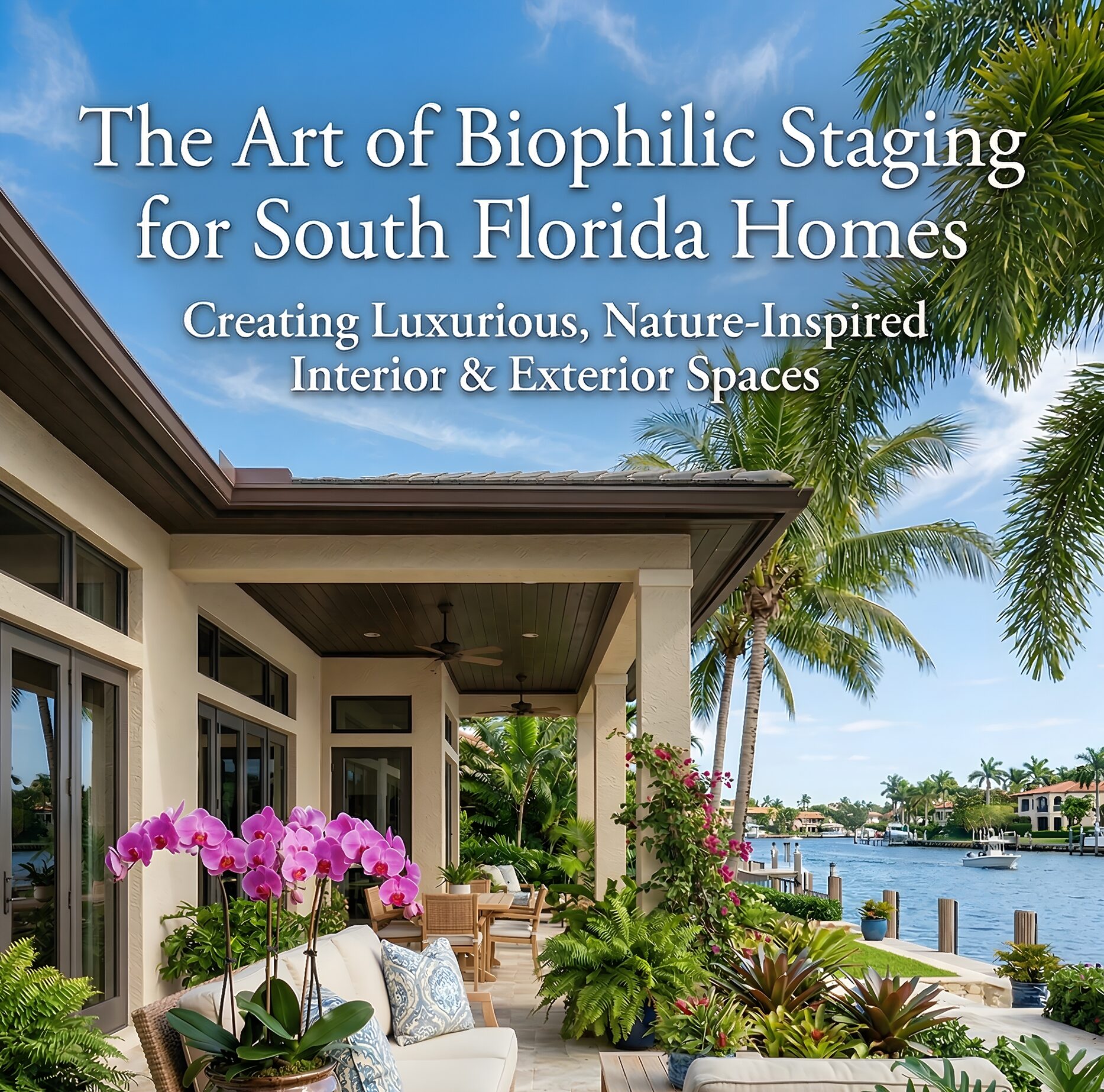
The Guide is My Gift to You
For those interested in this subject more deeply, I have created The Guide to Biophilic Staging for South Florida Homes, with tips to help you make your home feel more grounded, restorative, and connected to its environment.
Whether you are preparing a significant home for sale, considering thoughtful updates, or exploring a more intentional approach to luxury living in South Florida, The Guide offers a beautiful starting point.
Request Guide
The Guide is My Gift to You
Read My Biophilic Design Blog




Frequently Asked Questions
For Buyers
Biophilic design is an approach to the home that reflects our innate connection to nature. It often includes natural light, organic materials, greenery, water, open views, and a graceful relationship between indoor and outdoor spaces. The result is a home that feels calmer, healthier, more welcoming, and more connected to its surroundings.
Homes that feel healthier and more restorative often have abundant natural light, good airflow, a connection to outdoor space, natural materials, visual calm, and a sense of openness. These qualities can support well-being and create a home environment that feels balanced, peaceful, and easy to live in.
Many buyers today are looking for more than visual beauty alone. They are drawn to homes that feel peaceful, restorative, and supportive of daily well-being. Wellness-oriented design can contribute to that experience by creating a stronger sense of light, balance, comfort, and connection to nature.
Not at all. Biophilic design is not limited to one architectural style. A traditional, transitional, coastal, Mediterranean, or contemporary home can all reflect biophilic principles when they incorporate natural materials, meaningful light, strong indoor-outdoor flow, and a thoughtful relationship to landscape or water.
It is especially relevant here because South Florida naturally lends itself to this way of living. Sunlight, tropical greenery, waterfront settings, open-air spaces, and year-round indoor-outdoor living all make biophilic design feel particularly appropriate and compelling in this region.
Often, the difference lies in how the home relates to its setting. A waterfront home that embraces light, views, air, natural materials, and a seamless connection between indoors and out will often feel more serene and immersive than one that does not. The experience becomes not just scenic, but sensory and restorative.
Buyers interested in wellness-focused luxury homes often look for natural light, strong ventilation, healthy indoor-outdoor flow, peaceful private outdoor spaces, organic materials, greenery, shaded terraces, spa-like bathrooms, and a layout that feels calm rather than overstimulating.
The best way to recognize it is to stop looking at the home and start noticing your body. Nature-connected design works first at the nervous-system level. Does your breathing deepen when you walk through the front door? Do your shoulders relax as you move through the main living spaces? Does the primary suite make you want to linger? Those physical signals are more reliable than anything on the listing sheet. On a more deliberate level, look for what I think of as the five quiet signs: abundant natural light without harsh glare, living greenery placed thoughtfully rather than decoratively, materials that show their age gracefully, views that continue past the walls, and sounds or movements from the outdoors — birds, a breeze, water — that reach into the interior. When I tour homes with clients, I often point these out as we walk, so that by the second or third showing, they’re reading homes this way on their own.
Absolutely. In many of today’s most compelling homes, sustainability and luxury work beautifully together. Natural materials, energy-conscious choices, thoughtful landscaping, and a stronger connection to the environment can make a home feel more refined, timeless, and deeply livable.
Not at all. While these homes often resonate strongly with those who prioritize health, well-being, and sustainable living, their appeal is broader than that. Many people simply respond to spaces that feel beautiful, balanced, and in harmony with nature, whether or not they use those exact terms.
For Sellers
Yes, often in subtle but meaningful ways. Buyers respond strongly to atmosphere, and homes that feel light-filled, calm, healthy, and connected to their surroundings can leave a deeper emotional impression. Thoughtful biophilic touches can enhance how a home is experienced both online and in person.
Not necessarily. In many cases, the most effective changes are not structural. Emphasizing natural light, simplifying visual distractions, incorporating restrained greenery, using organic textures, and highlighting garden or waterfront views can all strengthen presentation without requiring major renovation.
The most effective approach is usually thoughtful rather than dramatic. Enhancing light, reducing clutter, softening interiors with natural materials, refining outdoor spaces, and drawing attention to views can all help create a home that feels more peaceful, more spacious, and more emotionally inviting.
Natural light, organic textures, greenery, fresh air, visually quiet styling, and a stronger connection between the interior and the landscape beyond it can all help a home show beautifully. These elements often make a property feel more elevated, current, and memorable.
Extraordinarily well — and this is one of its quietest advantages. The eye stops on images that contain life, light, and motion. Photographs of nature-connected rooms deliver all three: the natural curve of a palm frond, the varied greens of living plants, the texture of natural stone and wood, the glow of late-afternoon light coming through sheers, the shimmer of pool reflections on a ceiling. Flat conventional staging — matching pillows, symmetric lamps, empty counters — can read as artificial on camera in a way that a nature-connected space does not.
Increasingly, yes. Many buyers are prioritizing homes that feel supportive of well-being and everyday ease. Features such as natural light, indoor-outdoor living, private outdoor retreats, calming materials, and a healthy sense of flow can all enhance appeal.
The key is to present those features in a way that feels elegant and relevant to the overall lifestyle of the property. Natural materials, thoughtful landscaping, shaded outdoor areas, wellness-focused spaces, and environmentally conscious improvements can all be woven into a luxury marketing narrative in a refined way.
No. While waterfront and contemporary homes often lend themselves beautifully to this approach, biophilic principles can enhance many types of luxury homes. The key is understanding what is authentic to the architecture, setting, and character of the property.
Luxury marketing is most effective when it conveys not only the features of a home, but the experience of being there. Biophilic principles help express a more nuanced and aspirational form of luxury—one centered on serenity, well-being, timelessness, and connection to place.
A More Thoughtful Way to Experience Home
As a luxury real estate advisor, I am deeply interested in the qualities that make a home resonate—not only architecturally, but emotionally. Biophilic design speaks to an evolving understanding of luxury: one rooted not simply in prestige, but in beauty, well-being, authenticity, sustainability, and connection to place.
For sellers, these principles can elevate how a home is presented and remembered. For buyers, they can help illuminate what makes a home feel not only exceptional, but deeply livable.
In South Florida, and especially along the waterfront, this way of thinking feels particularly relevant. When a home is attuned to light, landscape, air, and water, it often offers something rare: not just shelter, not just elegance, but a genuine sense of sanctuary.
Not just guidance—discernment.