


InternationalBuyers & Sellers
Global. Coastal. Yours.
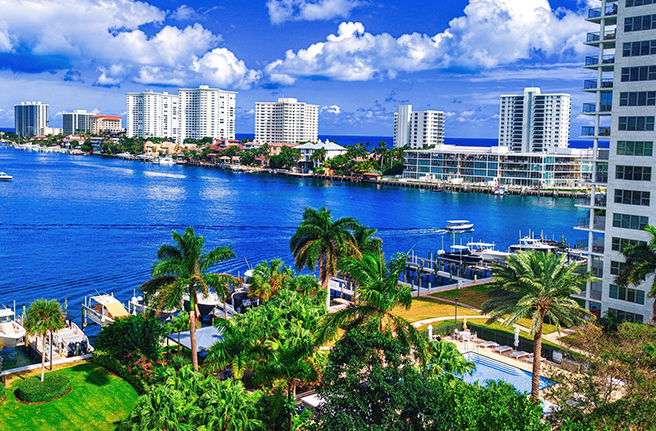
Moving across an ocean is more than a real estate transaction. It’s a reimagining of your daily life—where you’ll watch the sunrise, how your morning coffee will taste with salt air drifting through open windows, what it will feel like to step outside in January without reaching for a heavy coat.
I understand this deeply, because I’ve lived it. After more than 25 years in the Greater Boston area, I made my own leap—trading New England winters for South Florida sunshine. That experience taught me that the logistics of relocation, while important, are only part of the story. The emotional journey matters just as much.
My role is to walk beside you — answering questions before you know to ask them, so that when you finally turn the key in your new front door, you feel not like a visitor, but like someone who has come home. Beyond property tours, I’ll encourage you to wander Atlantic Avenue at sunset, have breakfast at an oceanside bistro, and feel what daily life here actually looks like. You’re not just buying a property—you’re choosing a community.





For InternationalSellers
If you currently own South Florida property and are considering selling from abroad, I provide comprehensive support: property preparation guidance, coordination with local service providers, professional photography and video marketing, and regular video consultations to keep you informed at every stage. I also work closely with international tax specialists who can help you understand FIRPTA requirements and plan for the tax implications of your sale well in advance of closing.”
Yes. The United States places very few restrictions on foreign property ownership. Citizens of virtually any country can purchase residential real estate in Florida with proper documentation. There is no requirement to be a US resident, hold a US visa, or have any prior US connection.
No. Property ownership does not require a US visa, and purchasing real estate does not grant any visa or immigration status. Whether you need a visa to visit your property depends on your country of citizenship — some nationalities enter visa-free, others require a B-1/B-2 visitor visa. The country profiles on this page cover entry requirements for each market I serve.
Cash buyers need only the purchase price plus closing costs — typically 2-3% of the purchase price. If financing through a US lender, international buyer programs typically require 30-40% down payment, though requirements vary by lender, property value, and your financial profile. The majority of my international clients purchase in cash, which also makes your offer more competitive.
FIRPTA — the Foreign Investment in Real Property Tax Act — requires that 15% of the gross sale price be withheld by the title company when a foreign owner sells US property. This is not a tax in itself; it is withheld against your potential capital gains liability. If your actual tax owed is less than the amount withheld, you may recover the difference through your US tax filing. For sellers, planning for FIRPTA well in advance of your sale — ideally with a cross-border tax specialist — is strongly advisable.
Yes. Several US lenders offer foreign national mortgage programs specifically designed for non-resident buyers. These typically require 30-40% down payment and carry somewhat higher interest rates than standard US mortgages, and the documentation requirements are more extensive. I can connect you with lenders experienced in international transactions.
This is one of the most important structural decisions you will make, and the right answer depends on your specific circumstances — particularly your country of residence and whether it has a bilateral tax treaty with the United States. As a non-US resident, your US-based assets are subject to US federal estate tax above a $60,000 exemption, which is far lower than the exemption available to US citizens. A US LLC can provide meaningful estate planning benefits and liability protection, but adds administrative complexity. I strongly recommend consulting a cross-border tax specialist before you decide — and before you close.
Annual costs typically include property taxes (1.5-2% of assessed value), homeowners insurance, flood insurance if your property is in a designated flood zone, and HOA fees if applicable. Property management fees apply if you use a manager during your absences, and US tax filing obligations may arise if you generate rental income. I help clients build a realistic total cost of ownership picture before they purchase.
From accepted offer to closing, plan for 45-60 days minimum. Cash purchases can close faster; financing adds time. International wire transfers — particularly from countries where correspondent banking adds steps — require additional lead time, and we build this into your closing timeline from the outset. The search process varies considerably: some clients purchase on their first visit, others explore over months or years. There is no wrong timeline.
Yes, and it is the consideration that surprises international buyers most. As a non-US resident, your US-based assets are subject to US federal estate tax on amounts above $60,000 — a threshold far lower than the exemption available to US citizens and permanent residents. Buyers from countries with a comprehensive US tax treaty (such as the United Kingdom and Canada) have access to meaningful treaty protections that significantly reduce this exposure. Buyers from countries without such a treaty face a more significant risk if they hold property in their own name. This is the primary reason why ownership structure — personal name versus LLC — matters so much, and why a cross-border tax specialist should be part of your team before you close.
A specialist currency broker will almost always give you a better exchange rate than a retail bank — sometimes meaningfully so on a large transaction. More importantly, currency brokers offer tools that banks typically do not: a Forward Contract locks in today’s exchange rate for a future transfer date, protecting you against adverse movements between signing a contract and closing. A Limit Order executes your transfer automatically when the rate reaches a target you specify. On a million-dollar purchase, even a modest improvement in the exchange rate can represent tens of thousands of dollars. I recommend engaging a currency broker early in the process — well before you make an offer.
No — a US bank account is not required to close on a property. Your funds can be wired directly from your home country bank or currency broker to the US title company’s escrow account. That said, establishing a US bank account after closing is advisable: it simplifies paying property taxes, HOA fees, insurance premiums, and utility bills, and makes any future transactions considerably easier. Several international banks have US affiliates that make this straightforward.
Beyond your real estate agent, three specialists are essential for an international purchase. A Florida real estate attorney reviews your contract, advises on ownership structure, and protects your interests through closing — this is not optional for cross-border transactions. A cross-border tax specialist with US expertise advises on estate planning, tax filing obligations in both countries, and the ownership structure decision before you close. A specialist currency broker manages your international wire transfer and protects you against exchange rate risk. I can provide introductions to trusted professionals in each of these roles.
Yes. Florida allows short-term and long-term rentals of privately owned property, subject to local regulations and HOA rules (some communities restrict or prohibit short-term rentals). Rental income from US property is generally taxable in the United States, and as a foreign owner you are typically required to file a US non-resident tax return (Form 1040-NR) if you generate rental income. Depending on your country of residence, a bilateral tax treaty may reduce your exposure to double taxation — this is one of the questions your cross-border tax specialist should address early in the process.
Have a question that isn't covered here? I am happy to answer it directly — by email, WhatsApp, or a scheduled call at a time that works across time zones.
Maureen Harmonay · Coldwell Banker Global Luxury- WhatsApp: 978.502.5800
- Phone: 561.288.0170
- Email: [email protected]